Emergency temporary protection and stabilization
The immediate goal after storm damage is stabilizing the roof to stop further damage, and for a Cool Creek facility owner, understanding the temporary protection involved clarifies what the emergency response accomplishes before permanent repair. Temporary protection buys critical time.
Tarping the damaged areas
Tarping covers damaged or open areas of the roof with secured tarps that keep water out, the most common emergency measure for a compromised roof. Tarping provides immediate protection. For a facility, tarping the storm damaged areas stops water from entering through the breaches, protecting the building until permanent repair. Properly secured tarps withstand weather and hold until the lasting repair is performed, which is why tarping is a frontline emergency measure that contains the water intrusion fast after a storm compromises the roof.
Sealing and dry in measures
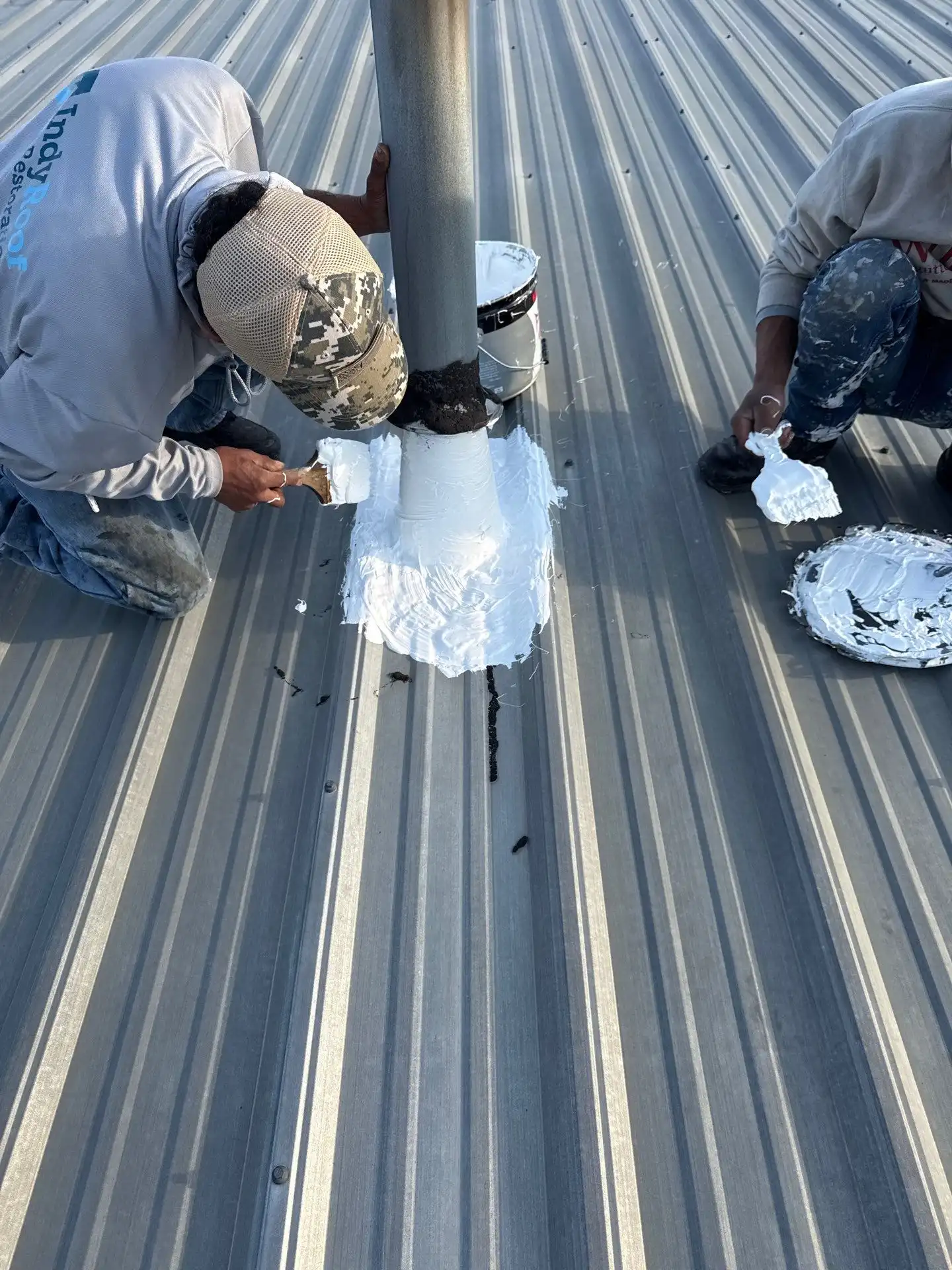
Beyond tarping, sealing and dry in measures close openings, breaches, and compromised details to make the roof temporarily weather tight. These measures stabilize the roof against water. For a Hamilton County facility, sealing damaged areas and applying dry in measures stops water intrusion through the specific points where the storm compromised the roof. Combined with tarping where needed, these measures make the roof temporarily weather tight, halting the active leaks and protecting the building until the permanent repair restores the roof's integrity for the long term.
Addressing immediate hazards
Emergency stabilization also addresses immediate hazards, removing dangerous debris, securing loose materials, and making the roof and area safe. Safety is part of stabilization. For a Cool Creek facility, addressing the immediate hazards a storm leaves, debris that could cause further damage, loose roofing that could blow, unsafe conditions, protects people and prevents additional harm. Handling these hazards during the emergency response, alongside stopping the water, makes the situation safe and stable, which is part of properly stabilizing a storm damaged roof before the permanent repair.
Buying time for proper repair
Temporary protection buys time to assess the full damage and plan and perform a proper permanent repair, without the pressure of an actively leaking roof. The stabilization removes the urgency. For a facility, the temporary protection's value is that it stops the active damage, allowing the permanent repair to be planned and done properly rather than rushed. With the roof stabilized, the owner and roofer can address the storm damage thoroughly and on a sensible timeline, since the building is protected in the meantime by the temporary measures.
Temporary protection is not the permanent fix
It is important to understand that temporary protection is a stopgap, not the permanent repair, since tarps and dry in measures protect the building short term but the roof must be properly repaired to restore its integrity. The permanent repair must follow. For a Hamilton County facility, relying on temporary protection long term is not adequate, since it is meant to stabilize the roof until the lasting repair. Following the emergency stabilization with the permanent repair in a reasonable timeframe is essential, since the temporary measures buy time but do not restore the roof's proper, durable condition.
Acting fast on stabilization
The sooner stabilization happens, the more damage is prevented, which is why emergency temporary protection is applied as quickly as possible after the storm. Speed maximizes the benefit. For a Cool Creek facility, fast stabilization stops the water intrusion early, before more damage accumulates, which is the whole point of the emergency response. The quicker the roof is tarped, sealed, and made safe, the more the building and its contents are protected, which is why responding promptly to stabilize a storm damaged roof matters so much for limiting the loss.
Stabilizing the roof to stop the damage
Emergency temporary protection, tarping, sealing and dry in, addressing hazards, and buying time for proper repair, stabilizes a storm damaged roof and stops further damage, though it is a stopgap that the permanent repair must follow. For a facility owner, this stabilization is what contains the emergency, protecting the building immediately after the storm until the roof can be properly restored.
The larger point about storm damage is that the cost of waiting almost always exceeds the cost of responding, since an open roof keeps letting water in and the damage compounds by the hour. A Cool Creek facility that calls for emergency response immediately contains the problem at its initial extent, while one that delays watches a localized breach become widespread damage to the roof, the structure, and the contents below. The single most important factor in how a storm emergency turns out is how fast the response begins, which is why acting at once matters so much.
Finally, the facilities that handle storms best are the ones prepared before the storm arrives, with a sound, maintained roof and an emergency roofer already identified. A facility that keeps its roof in good condition and knows who to call faces less damage and a faster response than one scrambling after the fact. Storm readiness is built in calm weather through maintenance and relationships, so that when a storm hits, the roof resists better and the response begins immediately, limiting the loss to the building and the operations it shelters.
It also helps to separate the two phases clearly, since stabilization and permanent repair serve different purposes and both are necessary. A Hamilton County facility that understands the temporary protection stops the bleeding while the permanent repair restores the roof will neither panic that the tarp is inadequate nor mistake it for the finished job. The emergency response buys time; the permanent repair uses that time to fix the roof properly. Keeping both phases in view leads to a storm damaged roof that is protected immediately and restored durably, which is the goal.
The larger point about storm damage is that the cost of waiting almost always exceeds the cost of responding, since an open roof keeps letting water in and the damage compounds by the hour. A Cool Creek facility that calls for emergency response immediately contains the problem at its initial extent, while one that delays watches a localized breach become widespread damage to the roof, the structure, and the contents below. The single most important factor in how a storm emergency turns out is how fast the response begins, which is why acting at once matters so much.
Get your roof stabilized now
Cool Creek Metal Roofing provides emergency stabilization for storm damaged Cool Creek commercial roofs, tarping and sealing fast to stop the water. Call {phone} now to get your roof stabilized. Fast temporary protection is what stops the damage until the permanent repair restores your roof.